
The information technology (IT) services industry may be headed for another year of sluggish growth. Based on the results of the top five IT services companies for the first quarter of 2025-26 (Q1FY26), analysts say the possibility of hitting high single-digit revenue growth in FY26 looks unlikely.

Real estate developers are hoping that the slew of tax concessions announced in Union Budget 2025, set to take effect this financial year, will spur demand for affordable and mid-segment housing, even as the broader housing market shows signs of fatigue.

The outcome of the Union Budget, quarterly earnings from corporates and global trends are the major factors to drive stock market sentiments this week, analysts said. Besides, the trading activity of foreign investors, the rupee-dollar trend and the movement of global oil benchmark Brent crude are also crucial aspects to watch out for.

Escalation of the conflict in West Asia between Israel and Iran has had a direct impact on the energy markets, and more broadly on the financial markets as well as the global economy.

Geopolitical tensions, trade policy uncertainties, volatility in international commodity prices and financial market uncertainties pose considerable risks to India's economic growth in the coming year, the finance ministry cautioned on Wednesday. "Global trade continues to be affected by uncertainty in the policy environment... tariff-related developments in multiple countries have heightened trade-related risks, affecting investment and trade flows globally.

While demand for sub Rs 50-lakh affordable housing prevails, market players cite increased land rates, escalated construction costs and low margins as key prohibiting factors.

The government's indirect tax collection is expected to increase by 8.3 pc in the financial year 2025-26 (FY26), according to a report by ICICI Bank. The report also noted that this growth is higher than the 7.1 per cent increase seen in FY25 and is mainly driven by rise in GST revenue from strong urban consumption. It said "The increase is driven by higher goods and services tax collections which in-turn is explained by boost to urban consumption".
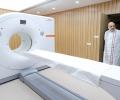
Do we have enough trained oncologists and medical professionals in India to man these over 4,500 beds in the public sector?

Analysts and economists have hailed the fiscal projections in the interim Budget, saying the lower fiscal deficit forecast shows that the government, even in an election year, is serious about fiscal consolidation and that the numbers look achievable. According to Devendra Kumar Pant, the chief economist at India Ratings, the two broad themes of the interim Budget are fiscal consolidation and stepping up focus on agriculture/rural to course correct, to some extent, the differential benefits of the ongoing economic growth that's tilted in favour of upper-income bracket/urban households. The projected fiscal deficit numbers for FY24 and FY25 suggest that the government is serious about achieving the fiscal consolidation path of 4.5 per cent fiscal deficit by FY26, and given the nominal GDP growth assumption and revenue buoyancy, the target appears plausible, Pant said in a note.

The Pradhan Mantri Awas Yojana-Grameen has the highest unutilised amount (Rs 13,111 crore) compared to any other centrally sponsored scheme.

The Rs 1-trillion Research Development and Innovation (RDI) fund, which was announced in the July budget for FY25, of which Rs 20,000 crore has already been allocated, will be operationalised in the next two to three months, a top official said.

Highlights of the Union Budget 2024-25 presented by Finance Minister Nirmala Sitharaman in Lok Sabha on Tuesday.

Following are comments from economists at leading financial institutions, banks and rating agencies on the interim Budget:
'As the Budget has taken some measures to spur growth, similar action from the MPC may be expected.'

States are on track of fiscal consolidation with their total borrowings reaching Rs 5 trillion till October, which is 60 per cent of the projected borrowings of Rs 8.38 trillion till December 2024, according to data from official sources. Government officials said the lower-than-projected borrowings by states were a sign of prudent fiscal management by them. States announce their borrowing plans every quarter.

The Interim Budget for 2024-25 (FY25) to be presented on February 1 is likely to assume 10-10.5 per cent nominal gross domestic product (GDP) growth against 8.9 per cent estimated for FY24 by the National Statistical Office (NSO). "We were waiting for the First Advance Estimates GDP numbers for FY24. "We will finalise the nominal GDP growth assumption for FY25 Interim Budget in a couple of days.

Hero MotoCorp is expecting its electric vehicle (EV) business to break even once it reaches monthly sales volumes of 25,000 to 30,000 units, which is a couple of years away, Chief Financial Officer (CFO) Vivek Anand said on Tuesday. "This year, in 2024-25 (FY25), if I really look at my EV performance, our volumes have grown by 200 per cent," Anand told analysts during the company's post-results conference call.

Having missed the target for the current financial year, Finance Minister Nirmala Sitharaman on Saturday proposed to spend Rs 11.21 lakh crore towards capital expenditure (capex) for FY26. However, the capex target is going to be missed by about 93,000 crore for the current financial year.

Fitch Ratings on Monday said India's pace of debt reduction is gradual, leaving room for a downside risk to sovereign rating in the eventuality of a significant economic shock. However, the rating agency expressed confidence in India's ability to stick to its medium-term fiscal framework, which aims to reduce debt and bring it on a downward trajectory over time.

Using the debt-to-GDP ratio as a fiscal anchor aligns with efforts to promote fiscal transparency through proper disclosure of off-budget borrowings.

The generation of quality jobs and skill development should be the focal point, cutting across ministries and departments, asserts Nivedita Mookerji.

'The conspiracy is to end India's entrepreneurship culture even before it fully blooms.' 'Negativity is being spread in society towards all those who do business, and this hatred for business and wealth creators is spilling everywhere.'
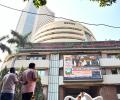
'BSE has facilitated nearly Rs 35 trillion in capital raising across multiple segments.'

The RBI under new Governor Sanjay Malhotra on Friday cut interest rate for the first time in nearly five years as the central bank pivoted the policy stance to support a shuttering economy. The 25 basis points rate cut to 6.25 per cent comes after last rate reduction in May 2020. The last revision of rates happened in February 2023 when the policy rate was hiked by 25 basis points to 6.5 per cent.

Delivering her sixth straight Budget, on Thursday, Finance Minister Nirmala Sitharaman left the taxpayers disappointed by not proposing any changes.

Why has the shift from ICE to electric slowed down despite initial enthusiasm?

Whether the ambitious targets are achievable is a moot question as India's earlier target was 20,000 MW of nuclear power by 2020.
Gross GST collections grew 8.5 per cent to over Rs 1.82 lakh crore in November on account of increased sales spurred by the festive season.

Continuing on the fiscally prudent path, the Modi government in the interim Budget refrained from announcing populist measures, which will help it trim the fiscal deficit to 5.1 per cent of the GDP next fiscal and 4.5 per cent in FY26.

Headline growth was quite weak heading into the Covid period but averaged 6.4 per cent and 6.7 per cent in the five years between FY16 and FY20 for GVA and GDP respectively, points out Abhishek Upadhyay.

'The nominal GDP growth assumption for FY25 may be revised upwards on higher growth expectations.'

The finance minister continues to be backed by the same policy team in charting out the broad strategy as in the few earlier Budgets.

Whether she will pare the fiscal deficit target of 5.1 per cent of GDP, using the record dividend received from the RBI, or expand flagship government programmes will be keenly watched.

After a massive selloff in the shares of food delivery giants Zomato and Swiggy, analysts believe the time may be right for investors to start adding these stocks to their portfolio carts. Their optimism, they say, stems from the sharp correction in stock prices and valuations, which seem to have "over-baked" concerns about the two companies.

'India has the potential to grow at more than 7%, with the monetary policy providing a supportive hand.'

Defence exports grew 33 per cent in the calendar year 2023 (CY23) to around Rs 21,083 crore while domestic defence orders serviced by listed companies were Rs 48,000 crore. The sector is poised for steady growth. Budgeted domestic capex is likely to hit Rs 3 trillion per annum, and exports could reach $6 billion by FY29.

To boost domestic manufacturing under the Make in India initiative and reduce dependency on imports, the government is expected to announce in the Budget an increase in the minimum local content requirement for public procurement, with certain sectors being granted exceptions. Currently, firms producing goods, services, or works with at least 50 per cent local content are classified as Class-I local suppliers and are preferred the most in government procurement.

Roads, railways, and coal together are likely to account for 70 per cent of the government's takings from the upcoming second edition of the National Monetisation Pipeline (NMP), set to run from FY26 to FY30. In comparison, these three sectors are estimated to have contributed 66 per cent in the first edition of the NMP - FY22 to FY25.
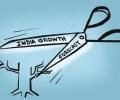
The GDP growth is expected to be about 6.3 per cent in the current fiscal year, a tad lower than the government's estimate of 6.4 per cent, owing to several factors such as weak demand, SBI research report said on Wednesday. According to the first advance estimates (FAE) of National Income for 2024-25 released by the National Statistics Office (NSO), released on Tuesday, India's economic growth rate is estimated to slip to a four-year low of 6.4 per cent in 2024-25, because of poor showing by the manufacturing and subdued investments.
 © 2026 Rediff.com - Advertise with us - Disclaimer - Privacy Policy - Sitemap - Feedback - About us - Terms of use - Grievances